Welcome to the exciting world of the Wok Style Frying Pan, your new secret weapon for culinary adventures right in your home kitchen! If you’ve ever dreamt of whipping up vibrant stir-fries, crispy fried rice, or even deep-fried delights with professional flair, but thought a traditional wok was too much for your modern stovetop, then the wok style frying pan is your answer. It’s the perfect fusion of ancient cooking wisdom and contemporary design, bringing the magic of high-heat cooking to every home chef. Get ready to transform your meals and ignite your passion for cooking!
What Exactly is a Wok Style Frying Pan?
A wok style frying pan is essentially a culinary bridge, expertly combining the best features of a classic Chinese wok with the practicality of a Western frying pan. Imagine the deep, sloped sides of a wok, perfect for tossing ingredients and containing heat, but instead of a rounded bottom that requires a special wok ring, it boasts a flat base. This innovative design makes the wok style frying pan perfectly suited for flat-top electric, ceramic, and induction stovetops, allowing you to achieve the intense, even heat distribution crucial for authentic Asian cooking. It’s more than just a pan; it’s a versatile tool engineered to bring global flavors right to your table.
A Brief Journey Through Wok History and Modern Adaptations
The story of the wok begins millennia ago in China, where its unique shape evolved to optimize fuel efficiency and cooking versatility. Traditional woks, with their characteristic rounded bottoms, were designed for cooking over open flames or charcoal braziers. They were a cornerstone of Chinese kitchens, used for everything from stir-frying to steaming, braising, and deep-frying. As global cuisines converged and kitchen technologies advanced, the need for a wok compatible with flat electric and induction cooktops became apparent. This led to the ingenious development of the wok style frying pan – a flat-bottomed adaptation that retains the core functionalities and culinary spirit of its ancient ancestor, making high-heat, dynamic cooking accessible to everyone, everywhere.
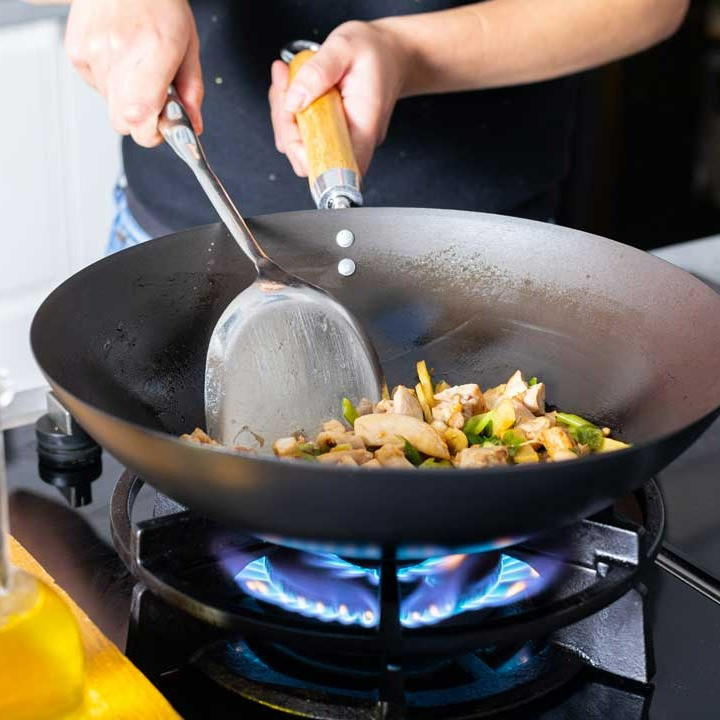
Exploring the Materials: Finding Your Perfect Wok Style Frying Pan
Choosing the right material for your wok style frying pan is key to unlocking its full potential. Each material offers distinct advantages and caters to different cooking styles and maintenance preferences.
Carbon Steel: The Chef’s Favorite
When it comes to the wok style frying pan, carbon steel is often hailed as the gold standard by professional chefs and home cooking enthusiasts alike. Renowned for its rapid and even heat distribution, carbon steel heats up quickly and responds instantly to temperature changes, giving you precise control over your cooking. With proper seasoning, it develops a naturally non-stick surface that improves with age and use, forming a beautiful, dark patina that’s incredibly durable. While it requires a bit of initial seasoning and ongoing care to prevent rust, the unparalleled cooking performance of a carbon steel wok style frying pan makes it a truly rewarding investment.
Cast Iron: Heavy-Duty Heat Retention
For those who prioritize exceptional heat retention and a robust build, a cast iron wok style frying pan is an excellent choice. Its substantial weight means it heats up more slowly than carbon steel, but once hot, it holds and distributes that heat incredibly well, making it ideal for searing, deep-frying, and dishes that require sustained high temperatures. Like carbon steel, cast iron develops a natural non-stick seasoning over time, becoming more efficient with each use. While it demands careful seasoning and drying to prevent rust, the durability and consistent heat of a cast iron wok style frying pan make it a workhorse in any kitchen.
Stainless Steel: Durable and Easy to Clean
Stainless steel wok style frying pans are celebrated for their durability, non-reactivity, and ease of maintenance. They are excellent for cooking acidic ingredients without fear of flavor transfer or material degradation. While pure stainless steel might not conduct heat as efficiently as carbon steel or cast iron, many high-quality stainless steel wok style pans feature an aluminum or copper core, enhancing their heat distribution properties. They don’t require seasoning, are typically dishwasher safe, and resist rust, making them a low-maintenance option for busy kitchens. If you’re looking for a reliable, easy-to-clean wok style frying pan that stands the test of time, stainless steel is a strong contender.
Non-Stick: Convenience with Caveats
Non-stick wok style frying pans offer the ultimate in convenience, making cooking and cleanup incredibly simple. The non-stick coating prevents food from sticking, allowing you to cook with minimal oil and enjoy effortless release. However, this ease comes with a few trade-offs. Non-stick coatings typically have a lower heat tolerance compared to carbon steel or cast iron, making them less suitable for intense, high-heat stir-frying, which is a hallmark of wok cooking. They also tend to have a shorter lifespan, as the coating can degrade over time, especially with frequent use of metal utensils or very high temperatures. For lighter stir-fries and general use, a non-stick wok style frying pan can be a good entry point, but it might not deliver the full authentic wok experience.
Mastering Your Wok Style Frying Pan: Usage and Care
Getting the most out of your wok style frying pan involves understanding a few key principles of usage and care, especially depending on its material.
First Steps: Seasoning Your Pan (for Carbon Steel & Cast Iron)
If you’ve opted for a carbon steel or cast iron wok style frying pan, seasoning is not just a step—it’s an essential ritual. Seasoning involves baking a thin layer of oil onto the pan’s surface, creating a polymerized, non-stick coating that also protects against rust. For initial seasoning, wash the pan thoroughly, dry it completely, apply a very thin layer of high smoke point oil (like grapeseed or flaxseed oil), wipe off any excess, and then heat it in an oven or on the stovetop until the oil smokes and forms a dark, glossy layer. Repeat this process several times. This creates a foundation for a naturally non-stick surface that will only get better with every delicious meal you prepare.
Heating Up: The Art of Temperature Control
The secret to amazing wok cooking in your wok style frying pan lies in mastering heat. Unlike conventional frying pans, wok cooking often demands high, sustained heat. Preheat your pan thoroughly before adding oil, letting it get visibly hot, sometimes even smoking slightly (depending on the oil and pan material). This ensures that your ingredients sear quickly, developing rich flavors and textures without becoming soggy. Learn to adjust your burner to maintain the “wok breath” – that energetic, high-temperature cooking zone that characterizes true wok cooking. Don’t overcrowd the pan; cook in batches if necessary to keep the heat high and achieve perfect results.
Cleaning and Storage: Keeping Your Pan Pristine
Proper cleaning and storage are vital for the longevity of your wok style frying pan. For carbon steel and cast iron pans, avoid harsh soaps or abrasive scrubbers, which can strip away the seasoning. Instead, clean immediately after use with hot water and a soft brush or sponge, gently scrubbing away food residue. For stubborn bits, you can deglaze with water while the pan is still warm. Always dry your pan thoroughly, either on low heat on the stovetop or with a clean towel, to prevent rust. Once dry, apply a very thin coat of cooking oil to the seasoned surface before storing. For stainless steel and non-stick pans, follow manufacturer’s instructions, but generally, warm soapy water and a soft sponge are sufficient. Store all pans in a dry place to prevent moisture damage.
Wok Wisdom: Essential Cooking Techniques
The wok style frying pan is a master of many culinary arts, thanks to its unique shape and heat dynamics. Here are some essential techniques you’ll want to perfect.
The Sizzle of Stir-Frying (Chao)
Stir-frying, or chao, is perhaps the most iconic technique associated with the wok, and your wok style frying pan is perfectly equipped for it. The deep, sloping sides allow you to toss and turn ingredients rapidly, ensuring even cooking and maximum flavor development. The key is high heat, minimal oil, and constant movement. Have all your ingredients prepped and ready to go – this is crucial for stir-frying as everything cooks very quickly. Start with aromatics, then add harder vegetables and meats, always keeping things moving. The goal is to cook ingredients until just tender-crisp, retaining their vibrant colors and distinct textures. Chef Mei Lin, a culinary instructor specializing in Asian cuisine, often says, “A good wok style frying pan bridges the gap between traditional techniques and modern kitchen realities, making authentic flavors accessible to everyone.”
Beyond Stir-Frying: Deep-Frying and Steaming
Your wok style frying pan is incredibly versatile, extending far beyond just stir-frying. Its deep sides make it an excellent vessel for deep-frying. The ample volume allows you to safely submerge food in oil while minimizing splattering. From crispy spring rolls to golden tempura, you’ll achieve beautifully fried results. For healthier cooking, the wok style frying pan can also be used for steaming. Simply place a steaming rack or a heat-proof plate with your food inside the pan, add a small amount of water to the bottom (below the rack/plate), cover with a lid, and bring the water to a simmer. This method is perfect for dumplings, fish, and vegetables, preserving nutrients and delicate flavors.
Searing Success in Your Wok Style Pan
Thanks to its flat bottom, the wok style frying pan excels at searing, creating that desirable crust on meats and vegetables. Unlike a traditional round-bottom wok, the flat base provides direct, even contact with your stovetop, allowing for consistent browning and caramelization. Get your pan very hot, add a small amount of high smoke point oil, and then carefully place your protein or vegetables in a single layer. Resist the urge to move them immediately; let them sit undisturbed for a few minutes to develop that beautiful, flavorful sear before flipping. This technique is fantastic for steaks, chicken breasts, and even denser vegetables like broccoli or Brussels sprouts.
The Wok Advantage: Why Choose a Wok Style Frying Pan?
Embracing the wok style frying pan in your kitchen brings a multitude of benefits that elevate your cooking experience and expand your culinary repertoire.
- Unmatched Versatility and Efficiency: This single pan can handle an incredible array of cooking tasks – stir-frying, deep-frying, steaming, searing, braising, and even smoking. Its design means fewer specialized pans cluttering your kitchen, streamlining your cooking process and making cleanup simpler.
- Healthier Cooking Habits: The high heat and efficient design of a wok style frying pan mean you can cook quickly with less oil. Ingredients retain more of their nutrients and natural flavors, leading to lighter, fresher, and often more wholesome meals. It encourages a style of cooking that prioritizes fresh ingredients and quick preparation.
- Unlocking Deeper Flavors: The unique shape and heat distribution of a wok style frying pan contribute to what’s often called “wok hei” – the elusive “breath of the wok.” While most achievable over powerful gas flames, a well-used carbon steel wok style frying pan on a high-heat burner can still impart a subtle, smoky char and incredible depth of flavor that’s hard to replicate in other cookware.
Delicious Dishes to Create in Your Wok Style Frying Pan
The possibilities are endless with your wok style frying pan. Here are just a few ideas to get your culinary creativity flowing.
- Classic Stir-Fries: Dive into the world of vibrant stir-fries. Think savory Kung Pao Chicken with peanuts and dried chilies, a comforting Beef with Broccoli, or a speedy Shrimp and Asparagus Stir-Fry. The rapid cooking keeps ingredients crisp and flavors bright.
- Flavorful Fried Rice and Noodles: Elevate your grains and noodles. Craft a perfect Yangzhou Fried Rice with char siu and shrimp, a spicy Pad See Ew with wide rice noodles, or a simple yet satisfying Vegetable Lo Mein. The high heat prevents sticking and develops a lovely texture.
- Creative Deep-Fried Treats: Indulge in some deep-fried delights. From perfectly crispy homemade spring rolls and savory potstickers to tempura vegetables and even sweet banana fritters, your wok style frying pan provides the ideal depth for safe and efficient deep-frying.
Your Burning Questions Answered: Wok Style Frying Pan FAQ
Got more questions about making the most of your wok style frying pan? We’ve got you covered.
Q: Can I achieve “wok hei” with a wok style frying pan?
A: While traditional “wok hei” is best achieved with a round-bottom wok over a high-BTU burner or open flame, you can absolutely get a fantastic smoky flavor and char in your wok style frying pan. The key is to get your pan extremely hot, use small batches of ingredients, and keep them moving rapidly to mimic the high-heat searing effect that contributes to “wok hei.”
Q: How do I know what size wok style frying pan to buy?
A: The ideal size depends on your household and cooking habits. For 1-2 people, a 10-12 inch (25-30 cm) wok style frying pan is usually sufficient. For families of 3-4 or frequent entertaining, a 14-inch (35 cm) pan offers more cooking surface. Remember that larger pans can be heavier and take up more storage space.
Q: Is a wok style frying pan good for induction cooktops?
A: Yes, a wok style frying pan with a flat, magnetic base (like cast iron or certain types of carbon steel and stainless steel) is excellent for induction cooktops. The flat bottom ensures full contact with the induction surface, allowing for efficient and even heating, which is crucial for effective wok cooking.
Q: What’s the best oil to use for wok style cooking?
A: For high-heat wok style cooking, you’ll want to use oils with a high smoke point. Good choices include grapeseed oil, peanut oil, canola oil, and refined avocado oil. These oils can withstand the high temperatures without breaking down or imparting off-flavors.
Q: How often should I re-season my carbon steel wok style frying pan?
A: For a carbon steel wok style frying pan, re-seasoning is typically only needed if the existing seasoning is damaged (e.g., from harsh scrubbing, rust, or prolonged acidic cooking) or if food starts to stick excessively. With regular use and proper cleaning (avoiding soap, drying thoroughly, light oiling), the seasoning will naturally build up and become more robust over time.
Ready to Wok Your World?
The wok style frying pan is more than just a piece of cookware; it’s an invitation to explore a world of flavors and techniques. From the ancient traditions of stir-frying to modern culinary innovations, this versatile pan empowers you to create delicious, healthy, and exciting meals with confidence and flair. So, go ahead, choose your perfect wok style frying pan, embrace the sizzle, and let the aroma of incredible food fill your kitchen. Your culinary adventure starts now – happy cooking!