Imagine a kitchen tool so versatile, so dynamic, it transforms everyday cooking into a culinary adventure. That’s the magic of the wok. While a standalone wok is a powerhouse, a well-chosen Wok Pan Set unlocks an entire universe of flavors and techniques, making it an indispensable cornerstone for any home chef. From lightning-fast stir-fries that sing with smoky “wok hei” to comforting stews and perfectly steamed dumplings, a quality wok set invites you to explore the rich tapestry of Asian cuisine and beyond, right in your own kitchen.
The Timeless Appeal of the Wok: A Culinary Journey
The wok’s story is as rich and enduring as the flavors it helps create. Its origins trace back over 2,000 years to China’s Han Dynasty, where it emerged as a fundamental cooking vessel. The very name “wok” comes from the Cantonese term for “cooking pot,” a humble designation for such a remarkably versatile piece of equipment. Historically crafted from thin steel, copper, or iron, early woks were designed with a characteristic round bottom, perfectly suited for the intense, focused heat of traditional open flames. As culinary landscapes evolved and home kitchens adapted, so too did the wok. Modern iterations often feature flat bottoms, making them compatible with a wider array of stovetops, including gas, electric, and even induction, without sacrificing much of their traditional efficiency. This adaptability has cemented the wok’s place as a global kitchen essential.
What Makes a Wok Pan Set Essential?
You might wonder, “Why a wok pan set when a single wok seems capable enough?” The answer lies in holistic culinary readiness. A true wok pan set extends beyond just the main pan, typically including a custom-fit lid and essential cooking tools like a wok turner or spatula, and sometimes even a ladle. For round-bottom woks, a wok ring is often part of the package, providing the stability needed for conventional stovetops. This comprehensive approach means you’re not just buying a pan; you’re investing in a complete system designed to maximize your wok cooking experience. Each component works in harmony, from steaming with the lid to precisely maneuvering ingredients with the specialized turner, ensuring you have the right tools for every task, right out of the box.
Decoding Wok Materials and Designs: Your Perfect Match
Choosing the right wok pan set begins with understanding the materials and designs available, as each offers distinct advantages for different cooking styles and kitchen setups.
Carbon Steel Woks
Often considered the gold standard by professional chefs, carbon steel woks are the traditional choice. They are highly durable, heat up incredibly fast, and, crucially, respond almost instantly to changes in temperature, giving you superior control over your cooking. Carbon steel is also lighter than cast iron or stainless steel, making the dynamic tossing motion essential for stir-frying much easier. While they offer a naturally smooth cooking surface, carbon steel woks do require seasoning and diligent maintenance—hand-washing, thorough drying, and regular oiling—to prevent rust and build a non-stick patina.
Cast Iron Woks
For those prioritizing exceptional heat retention and searing capabilities, a cast iron wok is an excellent option. This heavy-duty material excels at browning ingredients and maintaining consistent high temperatures, perfect for achieving that sought-after char. However, their significant weight makes them less ideal for tossing food, and they also take longer to heat up and cool down. Like carbon steel, cast iron woks need proper seasoning and care to maintain their non-stick properties and longevity.
Non-Stick Woks
If convenience and easy cleanup are high on your list, a non-stick wok pan set might be your best bet, especially for beginners. Foods release effortlessly, and cleanup is typically a breeze. Non-stick woks are generally lighter, making them easy to maneuver for practice tossing. However, they are more delicate, prone to scratches (especially from metal utensils), and usually have a lower maximum heat tolerance, which can make achieving a deep “wok hei” challenging.
Stainless Steel Woks
Stainless steel woks offer durability, resistance to stains, and ease of cleaning, often with the added benefit of being dishwasher-safe (always check manufacturer guidelines). Many feature an aluminum core to enhance heat conduction. While robust and aesthetically pleasing, stainless steel woks are typically heavier than carbon steel and may take longer to heat evenly. They also require more oil to prevent sticking compared to seasoned carbon steel or cast iron.
Flat-Bottom vs. Round-Bottom Woks
The bottom design is crucial for stovetop compatibility:
- Round-Bottom Woks: These traditional woks concentrate heat directly at the center, creating intense hot spots and cooler zones on the sloped sides. They are ideal for powerful gas burners, especially when paired with a wok ring, which provides stability and optimizes heat distribution.
- Flat-Bottom Woks: An adaptation for modern kitchens, flat-bottom woks sit stably on any stovetop, including electric and induction. While they offer more even heat across the base, achieving the distinct heat zones of a round-bottom wok on a flat surface can be different. Induction stoves, in particular, require a flat bottom for direct contact heating.
The Art of Wok Mastery: Usage and Care
Owning a wok pan set is just the beginning; mastering its use and care is where the true culinary journey unfolds.
Seasoning Your Wok: The Foundation of Flavor
For carbon steel and cast iron woks, seasoning is not just a ritual—it’s the secret to their natural non-stick surface and an added layer of flavor. Chef Ling Lee, a renowned expert in East Asian cooking, emphasizes, “Proper seasoning creates an invisible shield, ensuring your food glides effortlessly and infuses every dish with that irreplaceable subtle char.” To season, heat your wok over a burner until the metal visibly changes color (often blue). Then, apply a thin layer of high smoke point oil, such as grapeseed or vegetable oil, and spread it around. Wipe away any excess and repeat this process three to four times to build a robust, protective layer.
Daily Care and Maintenance Tips
Maintaining your wok is vital for its performance and longevity.
- Preheat Like a Pro: Always preheat your wok until it’s hot and the oil is smoking before adding ingredients. This prevents sticking and is crucial for developing “wok hei.”
- Cleaning Carbon Steel and Cast Iron: After cooking, clean these woks with a non-abrasive scrubber and hot water. Avoid harsh detergents; a small amount of soap is generally acceptable, but always rinse thoroughly and dry immediately on the stove over low heat. Re-oiling lightly after each use helps maintain the seasoning. Never put these woks in the dishwasher, as it strips the seasoning and can lead to rust.
- Cleaning Non-Stick Woks: Use a nylon scrubber and mild dish soap. Always avoid metal utensils or abrasive pads, as they can damage the non-stick coating.
- Oven Use: Woks with wooden handles are not designed for oven use. Also, never place a round-bottom wok on flat oven racks, as it can be unstable and dangerous.
Wok Longevity: Storage and Preservation
Proper storage ensures your wok set remains ready for action. For carbon steel and cast iron woks, store them in a dry place to prevent rust. If stacking, place a paper towel between the wok and other cookware to absorb any residual moisture and protect the seasoned surface. For non-stick woks, use pan protectors to prevent scratches if stacking.
Unleashing Culinary Creativity: Wok Cooking Techniques
The wok’s unique shape and material properties enable a diverse range of cooking techniques, making a wok pan set incredibly versatile.
The Sizzle of Stir-Frying: Achieving Wok Hei
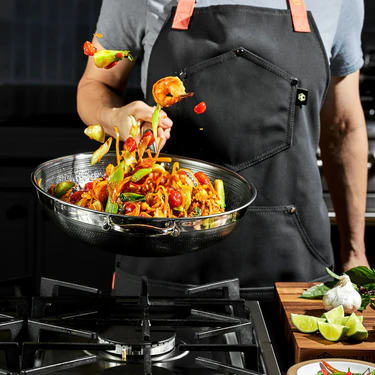
Stir-frying is the wok’s signature dance, a rapid, high-heat method that yields vibrant, crisp-tender ingredients. The sloped sides of the wok are ingenious, creating different temperature zones: searing hot at the bottom and gradually cooler towards the edges. This allows you to cook ingredients at varying rates by moving them up and down the sides. The ultimate goal of stir-frying is to achieve “wok hei,” or the “breath of the wok”—that elusive smoky, caramelized flavor that comes from food being intensely seared and briefly interacting with the flames or superheated air. While challenging to replicate perfectly on a home stove without professional-grade BTUs, preheating your wok to smoking hot before adding oil and cooking in batches are key steps to getting close to this coveted taste.
Beyond Stir-Frying: The Wok’s Many Talents
The wok is far more than just a stir-fry pan. Its deep, wide basin and high sides make it exceptionally adept at:
- Deep-Frying: The shape requires less oil than a traditional pot, and the high sides minimize splatters, making it a cleaner and more efficient way to deep-fry.
- Steaming: With a fitted lid and a steaming rack (often included in a wok pan set), your wok becomes an excellent steamer for dumplings, buns, whole fish, and vegetables.
- Boiling and Stewing: Its ample capacity is perfect for boiling noodles, blanching vegetables, or simmering hearty stews and braised meats.
- Pan-Frying and Searing: The intense heat at the bottom is ideal for searing meats or pan-frying fish.
- Even Popcorn! Many home cooks use their wok for unexpected delights like perfectly popped popcorn.
The Undeniable Benefits of a Wok Pan Set
Investing in a wok pan set brings a host of advantages to your culinary endeavors:
- Speed and Efficiency: Woks heat up quickly and cook food rapidly, making them perfect for weeknight meals.
- Healthier Cooking: The high heat and efficient design often require less oil compared to flat-bottomed pans, promoting lighter, healthier dishes.
- Unrivaled Flavor Development: Only a wok can truly achieve the complex, smoky “wok hei” that elevates stir-fries to a professional level.
- Versatility Personified: From a single piece of cookware, you can execute a myriad of cooking methods, reducing the need for multiple specialized pots and pans.
- Cooking for a Crowd: The generous capacity of a wok, especially a 12- to 14-inch model, allows you to cook substantial portions, ideal for families or entertaining guests.
A World of Flavors: Popular Wok Dishes to Try
With a wok pan set in your arsenal, you’re ready to create a culinary tour de force. Dive into classics like Chicken Teriyaki with crisp-tender vegetables, savory Beef and Broccoli, or perfectly textured Fried Rice. Experiment with deep-fried spring rolls or tempura, or steam delicate fish and fluffy bao buns. Don’t stop at Asian cuisine; use your wok to make hearty lamb stews, braised pork belly, or even a quick pan-fried chicken. The possibilities are truly endless, limited only by your imagination.
Expert Corner: Insights from Chef Ling Lee
“Many home cooks are intimidated by the wok, thinking it’s only for complex Asian dishes or professional kitchens,” shares Chef Ling Lee. “But with a quality wok pan set and a little practice, anyone can harness its incredible power. It’s about understanding the heat, trusting the materials, and having the right tools to bring vibrant, flavorful meals to life with surprising ease. The wok doesn’t just cook food; it transforms ingredients into an experience.”
Frequently Asked Questions About Wok Pan Sets
Q: What’s typically included in a wok pan set?
A: A wok pan set usually includes the wok itself, a well-fitting lid for steaming and simmering, and essential utensils like a wok turner (spatula) and sometimes a ladle. For round-bottom woks, a wok ring for stovetop stability is often part of the set.
Q: Can I use a wok pan set on an induction stove?
A: Yes, if your wok pan set includes a flat-bottom wok. Induction stoves require direct contact with the cooking surface, so round-bottom woks are not compatible unless they have a special induction-compatible flat base.
Q: How do I properly clean my carbon steel wok after cooking?
A: For a carbon steel wok, clean it immediately after use with hot water and a non-abrasive brush or sponge. Avoid harsh soaps. Dry it thoroughly on the stovetop over low heat to evaporate all moisture, then apply a very thin layer of cooking oil to maintain its seasoning and prevent rust.
Q: Is “wok hei” achievable in a home kitchen?
A: Achieving true restaurant-level “wok hei” can be challenging due to the lower BTU output of home stoves. However, you can approximate it by ensuring your wok is smoking hot before adding ingredients, cooking in small batches, and using a high-heat oil.
Q: What size wok pan set is best for a family of four?
A: A 12-inch or 14-inch wok is generally considered a good average size for a family of three to four people. This provides ample cooking surface for stir-frying generous portions without overcrowding.
Conclusion
The wok pan set is more than just kitchenware; it’s a gateway to culinary exploration, offering unparalleled versatility, speed, and flavor. From its ancient origins to its modern adaptations, the wok stands as a testament to efficient, delicious cooking. By understanding its materials, mastering basic care, and embracing its dynamic cooking techniques, you can transform your everyday meals into extraordinary feasts. So, go ahead, ignite your passion, gather your ingredients, and let your WokPro wok pan set inspire countless delightful dishes in your home kitchen.