Welcome to WokPro.vn, your premier destination for all things wok-related! If you’ve ever dreamt of creating vibrant, flavor-packed dishes with that irresistible “wok hei” aroma, you’re in the right place. A good Cooking Wok Pan isn’t just another piece of kitchen equipment; it’s a gateway to a world of culinary possibilities, a tool that empowers you to cook faster, healthier, and with more flavor than you ever thought possible. Let’s dive deep into the fascinating world of the wok pan and discover why it’s an indispensable addition to any kitchen.
The Enduring Legacy of the Wok Pan: A Journey Through Time
The story of the wok pan is as rich and flavorful as the dishes it creates, stretching back thousands of years to ancient China. Initially known by its Cantonese name “wok” (鑊), meaning “cooking pot,” this deep, bowl-shaped pan emerged during the Han Dynasty (206 BCE–220 CE) as a response to fuel scarcity. Early models were often ceramic, used for basic tasks like boiling and stewing over open flames. Over centuries, particularly by the Tang (618–907 CE) and Song (960–1279 CE) dynasties, the wok evolved, transitioning to metal construction, primarily cast iron, for increased durability and heat efficiency.
It was in southern China, notably Guangdong (Canton), that the high-temperature stir-frying (chǎo) technique, synonymous with the wok today, truly flourished. The wok’s distinctive shape, with its rounded bottom and sloping sides, proved perfect for tossing ingredients quickly with minimal oil, optimizing fuel use and cooking speed—a necessity in growing urban populations. As Chinese migration and trade expanded from the 19th century onward, the wok traveled globally, adapting to local cuisines and stove types, from Southeast Asia to North America, cementing its status as a universal culinary icon.
Choosing Your Wok Pan: Materials, Shapes, and Sizes
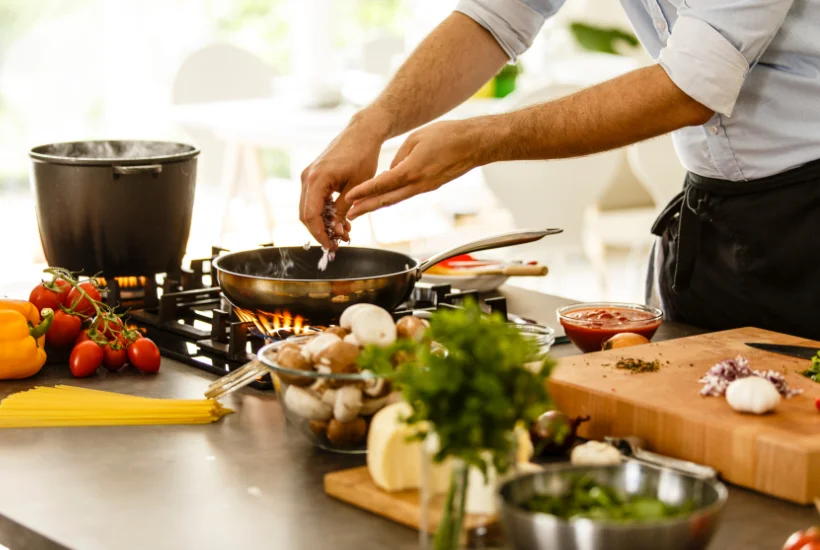
Selecting the perfect cooking wok pan can feel a bit like finding a culinary soulmate – it needs to fit your style and your kitchen. Woks come in various materials and designs, each offering unique advantages for different cooks and cooking methods.
Types of Wok Pan Materials
- Carbon Steel Woks: These are the workhorses of professional kitchens and a favorite among home cooks for good reason. Carbon steel heats up incredibly fast and evenly, making it ideal for the high-heat demands of stir-frying. With proper seasoning, a carbon steel wok develops a natural nonstick surface over time, which actually improves with use, contributing to that sought-after “wok hei” flavor. They are generally lighter than cast iron, making them easier to toss and maneuver. The main drawback is the need for regular seasoning and careful drying to prevent rust.
- Cast Iron Woks: Known for their exceptional heat retention, cast iron woks stay hot longer, which can be great for deep-frying and slow-cooking dishes. They are incredibly durable and can last a lifetime. However, cast iron woks are significantly heavier and take longer to heat up. Like carbon steel, they require diligent seasoning and care to maintain their nonstick properties and prevent rust.
- Stainless Steel Woks: Stainless steel woks are durable, rust-resistant, and relatively low-maintenance, requiring no seasoning. Many come with a multi-clad construction (e.g., a layer of aluminum sandwiched between stainless steel) to improve heat distribution, as stainless steel alone can be a slower heat conductor. They are also non-reactive, meaning you can cook acidic dishes without worrying about damaging the pan’s surface or imparting metallic flavors. While easy to clean, they might not achieve the same intense heat and “wok hei” as carbon steel.
- Nonstick Woks: Often made from aluminum or carbon steel with a nonstick coating, these woks are excellent for beginners or those who prefer cooking with minimal oil and easy cleanup. However, nonstick coatings typically have a lower heat tolerance and can degrade over time with high-heat cooking, meaning they won’t deliver the traditional “wok hei” experience. They also require non-metal utensils to protect the surface.
Round vs. Flat Bottom: What’s Best for Your Stove?
Traditionally, woks have a rounded bottom, perfectly designed to sit in a specialized wok burner with intense, enveloping flames, common in professional Asian kitchens. This shape creates distinct heat zones—super hot at the bottom, gradually cooler up the sides—ideal for rapid stir-frying and moving food around.
For most home kitchens, especially those with electric or induction stoves, a flat-bottom wok is a practical necessity. Its flat base provides stable contact with the heating element, ensuring even heat distribution. While a flat-bottom wok might not achieve the exact heat gradient of a traditional round-bottom wok on a dedicated burner, it still offers the core benefits of high-sided cooking. For gas stoves, both round-bottom (with a wok ring) and flat-bottom woks can work effectively.
For most home cooks, a wok size between 10 to 14 inches (25 to 36 cm) in diameter is ideal, balancing capacity with ease of handling. Handles also vary; traditional woks often have two loop handles, while modern versions may feature one long handle (for tossing) and a smaller helper handle (for lifting).
Unlocking Flavor: Essential Wok Pan Cooking Techniques
The cooking wok pan is famed for its versatility, allowing for a wide array of techniques that go far beyond just stir-frying.
The Art of Stir-Frying (Chǎo)
Stir-frying is the wok’s signature move, a rapid-fire cooking method that locks in flavors and textures. The key is high heat, swift movements, and meticulous mise en place (preparing all ingredients beforehand). First, preheat your wok until it’s smoking hot (around 300-400°C or 572-752°F). Then, add a high-smoke-point oil (like canola, peanut, or grapeseed) and swirl to coat. Ingredients are added in stages – aromatics (garlic, ginger) first, followed by proteins, and finally vegetables – ensuring everything cooks quickly and evenly. Constant tossing and stirring prevent steaming and promote the Maillard reaction, developing rich, complex flavors.
The pinnacle of stir-frying is achieving “wok hei,” a Cantonese term translating to “breath of the wok.” This unique smoky, charred aroma and enhanced savoriness come from the intense heat, the seasoned wok’s patina, and the brief combustion of oil vapors when food is tossed high over an open flame. It’s a hallmark of authentic Chinese stir-fries.
Beyond the Sizzle: Other Wok Pan Techniques
The wok’s unique design makes it an excellent tool for:
- Deep-Frying: Its high, sloping sides help contain oil splatters and require less oil than a flat-bottomed pot, making it perfect for crispy spring rolls, tempura, or even fried chicken.
- Steaming: By adding water to the bottom and placing a bamboo or metal steamer rack above, your wok transforms into an efficient steamer for dumplings, fish, or vegetables, preserving nutrients and delicate textures.
- Braising: Searing meats or vegetables first, then simmering them slowly in liquid with a lid, creates tender, flavor-rich dishes like red-braised pork belly.
- Boiling and Poaching: The wok’s ample capacity makes it suitable for boiling noodles or blanching vegetables.
- Smoking: With some foil and aromatic wood chips, a wok can even be used as a makeshift smoker to infuse foods with smoky flavors.
Caring for Your Wok Pan: Seasoning, Cleaning, and Longevity
To ensure your cooking wok pan lasts a lifetime and performs at its best, especially carbon steel or cast iron, proper care is paramount.
The Essential Seasoning Process
Seasoning creates a natural nonstick, rust-protective layer on carbon steel and cast iron woks. For a new wok, first, thoroughly wash it with hot, soapy water and a scrubber to remove any factory protective coatings, then dry it completely over low heat. Next, heat the wok over high heat until the metal changes color (often bluish or dark brown) or smokes lightly. This “bluing” prepares the surface for oil. Then, apply a thin layer of high-smoke-point oil (grapeseed, canola, peanut) to the entire interior, heating until it smokes and darkens, forming a polymerized film. Repeat this oiling and heating cycle 3-5 times in a well-ventilated area until a dark, shiny patina forms.
Daily Cleaning and Maintenance
After each use, clean your wok while it’s still warm. Use hot water and a soft sponge or bamboo brush to gently scrub away food residues. For carbon steel and cast iron, avoid harsh detergents, as they can strip the seasoning. If heavily soiled, mild soap can be used occasionally, but always follow with a light re-seasoning. Immediately after washing, dry the wok thoroughly over low heat on the stove for 1-2 minutes to evaporate all moisture and prevent rust. Finally, apply a thin layer of oil (again, high-smoke-point) to the interior and exterior surfaces with a paper towel, then heat briefly to reinforce the seasoning. Store your wok in a cool, dry place.
As Chef Kai Ling, a culinary advisor for WokPro, often says, “Treat your wok like a trusted friend. The more care and attention you give it, the more flavor and joy it will bring into your kitchen for years to come.”
Why Every Kitchen Needs a Wok Pan: Benefits Beyond the Sizzle
Beyond the sheer joy of dynamic cooking, integrating a cooking wok pan into your kitchen offers a myriad of practical benefits that elevate your culinary game.
- Unmatched Versatility: As we’ve seen, a wok isn’t just for stir-fries. It can deep-fry, steam, braise, boil, and even smoke. This multifunctionality means you can accomplish a wide range of cooking tasks with just one pan, saving space and simplifying your kitchen.
- Exceptional Efficiency: The wok’s ability to heat up quickly and distribute heat evenly across its wide surface area significantly speeds up cooking times. This high-heat, rapid-cooking environment not only gets meals on the table faster but also makes it highly fuel-efficient.
- Healthier Cooking: The sloped sides of a wok allow you to cook with less oil, as it pools naturally at the bottom, coating ingredients efficiently. The quick cooking process also helps vegetables retain more of their vitamins, minerals, and vibrant colors and textures, promoting healthier meals.
- Flavor Amplification: The unique thermal properties of a wok, particularly with carbon steel, enable the development of “wok hei”—a complex, smoky, umami-rich flavor that is incredibly difficult to achieve with other cookware. It transforms simple ingredients into extraordinary dishes.
- Effortless Food Handling: The high, sloping sides of the wok make tossing and stirring ingredients incredibly easy, minimizing spills and allowing for fluid, dynamic cooking movements. This makes for a more engaging and enjoyable cooking experience.
Wok Wonders: Popular Dishes to Master
With your cooking wok pan ready, the culinary world is truly your oyster. Here are just a few popular dishes you can master:
- Classic Stir-fries: From Chicken Lo Mein and Beef with Broccoli to vibrant Vegetable Fried Rice and fiery Kung Pao Chicken, stir-fries are the quintessential wok dish.
- Crispy Delights: Use your wok for perfectly deep-fried Spring Rolls, crispy Tempura vegetables, or even a batch of golden-brown Fried Chicken.
- Steamed Perfection: Delicate Steamed Fish with Ginger and Scallions or a batch of fluffy Dim Sum dumplings are beautifully prepared in a wok with a steamer insert.
- Rich Braises: Explore the depths of flavor with slow-cooked dishes like succulent Red-Braised Pork Belly (Hong Shao Rou).
Frequently Asked Questions (FAQ)
Is a wok pan difficult to use for beginners?
Not at all! While mastering the art of “wok hei” takes practice, basic wok cooking, especially stir-frying, is quite beginner-friendly. Start with simpler recipes, proper mise en place, and follow the heat guidelines, and you’ll be making delicious meals in no time.
Can I use a wok pan on an electric stove?
Yes, absolutely! For electric coil or induction stovetops, it’s recommended to use a flat-bottom wok to ensure maximum contact with the heating element and even heat distribution. Preheat your wok thoroughly on the highest setting before adding oil and ingredients.
What oil is best for wok cooking?
For high-heat wok cooking, choose oils with a high smoke point, such as canola oil, peanut oil, grapeseed oil, or refined avocado oil. These oils can withstand the intense heat without breaking down and producing off-flavors.
How often should I season my carbon steel wok?
Initially, season your new carbon steel wok 3-5 times. After that, with regular use and proper cleaning (avoiding harsh soaps), your wok will continue to build and maintain its seasoning. Re-seasoning might be needed if your wok becomes sticky, develops rust, or after cooking very acidic foods.
What is “wok hei”?
“Wok hei,” or “the breath of the wok,” refers to the unique, smoky, slightly charred, and intensely flavorful aroma imparted to food cooked rapidly at very high temperatures in a well-seasoned wok. It’s a signature characteristic of authentic Cantonese stir-frying.
Ignite Your Culinary Passion with a Wok Pan
The cooking wok pan is more than just a piece of cookware; it’s a culinary companion that opens up a world of aromatic flavors and efficient cooking. It teaches you to appreciate the dance of heat and ingredients, transforming simple meals into memorable experiences. Whether you’re a seasoned chef or just starting your culinary journey, embracing the wok pan will undoubtedly elevate your cooking and bring a new dimension of joy to your kitchen.
At WokPro.vn, we’re passionate about helping you discover the magic of the wok. We encourage you to explore, experiment, and share your wok cooking adventures with our growing community. Get ready to stir up some excitement and create incredible dishes that will delight your senses and impress your loved ones!