Stepping into the world of East Asian cuisine, or simply looking to elevate your everyday cooking, often leads to one magnificent piece of cookware: a wok pan. More than just a pot, it’s a versatile kitchen essential that has transcended centuries and cultures, becoming a beloved tool for home cooks and professional chefs alike. Imagine a single pan that can perfectly stir-fry, deep-fry, steam, and even smoke your favorite dishes, all while infusing them with an authentic flavor that flat-bottomed skillets can only dream of. This guide will take you through everything you need to know about a wok pan, helping you unlock its full culinary potential and transform your cooking experience.
The Enduring Legacy: A Wok Pan’s Journey Through History
The story of a wok pan is a testament to ingenious design born out of necessity. Its origins trace back over 2,000 years to ancient China, specifically during the Han Dynasty. The term “wok” itself is derived from the Cantonese word “huò,” which simply translates to “cooking pot.” Early versions were crafted from cast iron and featured a distinctive round bottom, a design choice driven by the scarcity of fuel. This shape allowed the wok to sit directly over open flames or charcoal stoves, efficiently concentrating heat and cooking food rapidly with minimal energy consumption.
As trade routes like the Silk Road flourished, the wok pan journeyed beyond China, influencing culinary traditions across Southeast Asia and eventually finding its way into kitchens worldwide. Its adaptable nature and multifunctional capabilities quickly made it an indispensable tool, evolving slightly in design and material but retaining its core essence as a culinary powerhouse.
Crafting Your Culinary Canvas: Types and Materials of a Wok Pan
Choosing the right a wok pan can feel overwhelming with the array of options available. The material, shape, and handle design all play a crucial role in its performance and your cooking experience.
Carbon Steel Wok Pan: The Chef’s Choice
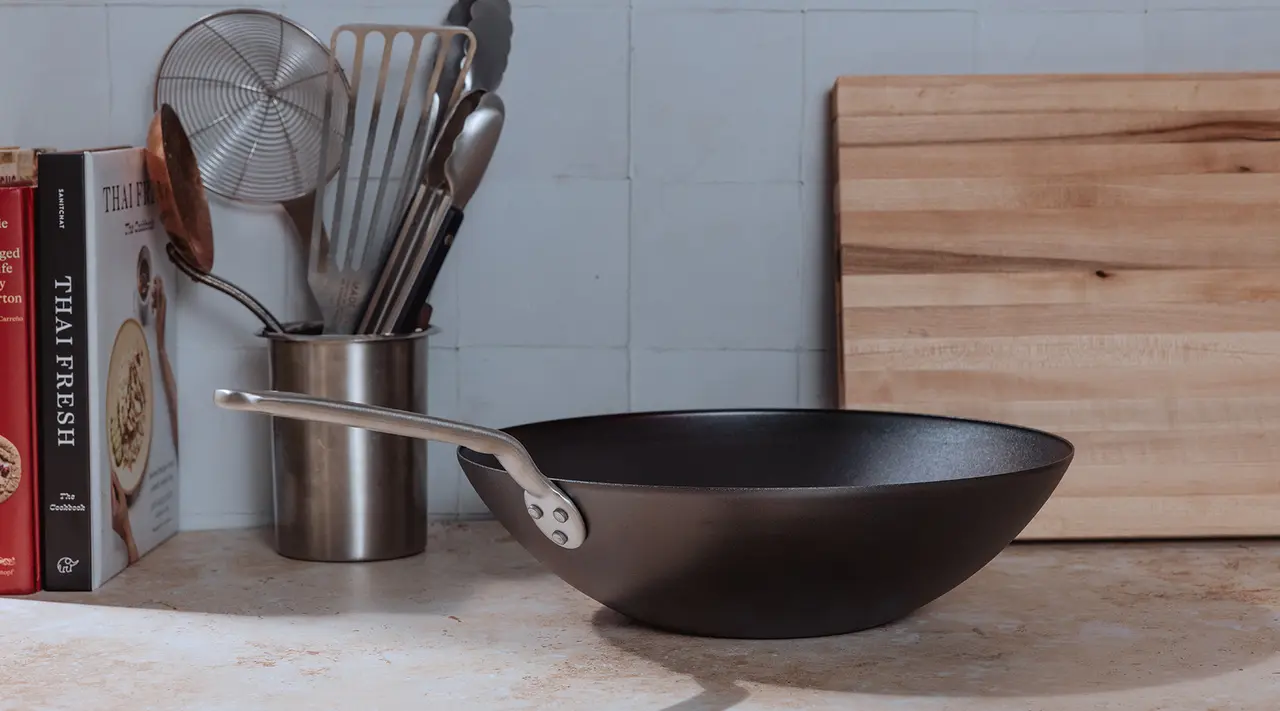
When it comes to authentic wok cooking, a carbon steel wok pan is the undisputed champion, widely preferred by experienced cooks and professional chefs. This material is celebrated for its exceptional heat conductivity, allowing it to heat up rapidly and respond instantly to temperature changes – a critical factor for perfect stir-frying. Carbon steel is also relatively lightweight, making it easy to toss and maneuver food, and, with proper seasoning, it develops a natural, remarkably non-stick surface. While it requires initial seasoning and ongoing care, many believe its superior performance and durability are well worth the effort.
Cast Iron Wok Pan: The Heat Retainer
A cast iron wok pan is known for its incredible heat retention, making it excellent for searing and keeping food warm. These woks are highly durable and, when properly seasoned, can develop a fantastic non-stick patina that improves with age. However, cast iron woks are significantly heavier and take longer to heat up compared to carbon steel. They also demand consistent seasoning and thorough drying to prevent rust.
Stainless Steel Wok Pan: Easy Care, Limited Performance
Stainless steel wok pans are attractive for their non-reactive properties, making them suitable for acidic dishes that might compromise the seasoning of carbon steel or cast iron. They are also generally easier to clean and maintain. However, stainless steel is a poor heat conductor, leading to uneven cooking and hot spots, and food tends to stick more readily. While some multi-ply stainless steel woks with aluminum cores offer better heat distribution, they often lack the responsiveness needed for high-heat wok cooking.
Non-Stick Wok Pan: Convenience at a Cost
Non-stick wok pans, often coated with Teflon or ceramic, offer immediate convenience with minimal sticking and easy cleanup. However, most non-stick coatings cannot withstand the incredibly high temperatures required for traditional wok cooking, leading to degradation, potential release of noxious fumes, and a rapid loss of their non-stick properties. They are also prone to scratching, which further compromises their effectiveness and durability. For true wok hei (the smoky flavor of wok cooking), these are generally not the ideal choice.
“For genuine wok cooking, carbon steel is my go-to. The way it heats up and cools down so quickly gives you unparalleled control, letting you really dance with your ingredients to achieve that perfect ‘wok hei’ every single time.” – Chef Ling Wei, Culinary Instructor
Wok Pan Shapes: Round vs. Flat Bottom
Traditionally, woks feature a round bottom, designed to nestle perfectly into a circular opening over a traditional stove or outdoor wok burner. This shape creates distinct heat zones, with the hottest point at the bottom and cooler areas up the sloped sides, ideal for pushing food away from direct heat as it cooks.
For modern Western kitchens, a flat-bottom wok pan is the more practical choice. It provides stability on standard electric, gas, and induction cooktops, allowing for even heat distribution across its base. While some purists argue it slightly diminishes the traditional tossing motion, a good flat-bottom wok can still deliver excellent results for home cooks.
Handles and Size Considerations
Wok handles come in two main styles: the traditional two-loop metal handles (often called “ear handles”) and the long, single wooden or phenolic handle, sometimes accompanied by a smaller helper handle on the opposite side. Long wooden handles are preferred for stir-frying as they remain cool and allow for easy tossing. For home use, a wok pan between 10 to 14 inches (20-36 cm) in diameter is generally ideal, offering ample cooking space without being unwieldy.
Mastering the Heat: Using and Caring for a Wok Pan
Proper care is paramount, especially for carbon steel and cast iron wok pans, to ensure their longevity and superior performance.
The Art of Initial Seasoning
Seasoning is the process of baking oil into the metal to create a natural, non-stick surface and protect against rust. Here’s how to season a new carbon steel wok pan:
- Clean Thoroughly: New woks often come with a protective factory coating. Scrub the wok vigorously with hot soapy water and a stainless steel scouring pad to remove all residues. If your wok has a wooden handle, avoid soaking it.
- Dry Completely: Dry the wok immediately with paper towels, then place it over low heat on the stove for a minute or two to evaporate any remaining moisture. Water is the enemy of carbon steel and cast iron, leading to rust.
- Heat and Discolor: Place the wok over high heat. Rotate it slowly, exposing all parts to the flame, until the metal begins to change color (often to a blueish tint). This can take 10-15 minutes and will produce smoke, so ensure good ventilation.
- Oil and Repeat: Turn down the heat to medium-low. Add a tablespoon of high smoke point oil (such as rice bran, peanut, or sunflower oil) to the wok. Using a paper towel held with tongs, carefully rub a thin layer of oil over the entire inside surface, ensuring it reaches the sides. Continue heating until the oil is absorbed and no longer visible.
- Build the Patina: Repeat the oiling and heating process three to four more times, or until the paper towel used to wipe the pan no longer turns grey. Let the pan cool, then rinse with hot water, dry thoroughly, and heat over a flame again for a minute to ensure it’s bone dry.
Daily Care for Your Wok Pan
After each use, clean your wok pan promptly.
- Wash Gently: Rinse with hot water and use a soft sponge or wok brush to remove food residue. While purists often advise against soap, a mild dish detergent is generally fine, especially for carbon steel, as long as you re-oil afterwards.
- Dry Immediately: This step is non-negotiable! Thoroughly dry your wok pan with a towel, then place it back on the stove over medium-high heat for a minute or two until all moisture has evaporated.
- Light Oiling: Once dry and slightly cooled, rub a very thin layer of cooking oil over the entire cooking surface with a paper towel. This protects the seasoning and prevents rust.
Maintenance and Troubleshooting
If your wok pan develops rust or becomes sticky, don’t despair! You can revive it. Heat a cup of salt in the pan on high heat for a minute, then reduce heat to low and use a metal spatula to push the hot salt around for five minutes. Let it cool, then rub the salt into problem spots. Rinse and re-season as if it were a new pan. Regular cooking is the best way to maintain and enhance the seasoning of your wok pan.
The Art of Wok Cooking: Techniques and Benefits of a Wok Pan
A wok pan is a master of many cooking techniques, making it an incredibly versatile addition to any kitchen.
Versatile Techniques
- Stir-Frying: The most iconic use, stir-frying in a wok pan allows ingredients to cook quickly and evenly over high heat, capturing vibrant flavors and crisp textures.
- Deep-Frying: The deep, sloped sides of a wok pan make it excellent for deep-frying, requiring less oil than a flat-bottomed pot and minimizing splattering.
- Steaming: With a lid and a steaming rack, a wok pan transforms into an efficient steamer, perfect for vegetables, fish, and dumplings, preserving nutrients and natural flavors.
- Boiling and Braising: Its large capacity makes it suitable for boiling noodles or vegetables, and its heat retention is great for slow-cooking braised dishes.
- Smoking: With wood chips and a rack, a wok pan can even be used as a makeshift smoker for meats and cheeses.
Benefits of Cooking with a Wok Pan
Cooking with a wok pan offers a myriad of advantages that go beyond its sheer versatility:
- The Magic of “Wok Hei”: This elusive, smoky, charred flavor, literally translating to “the breath of the wok,” is the hallmark of authentic stir-fries. It’s achieved through extremely high heat, rapid cooking, and the unique interaction of food with the wok’s seasoned surface.
- Healthier Meals: The design of a wok pan, with its concentrated heat and sloped sides, allows you to cook with significantly less oil than traditional frying pans. The quick cooking times also help preserve the vitamins and minerals in your ingredients, promoting more nutritious meals.
- Speed and Efficiency: A wok pan heats up fast and distributes heat incredibly efficiently, allowing you to cook meals in minutes. This speed is crucial for retaining the crisp texture of vegetables and preventing overcooking.
- Superior Control and Capacity: The sloped sides make tossing and turning ingredients effortless, ensuring everything cooks evenly. The varying heat zones allow you to manage different ingredients simultaneously, moving some to cooler areas as others sear. Plus, its generous volume easily accommodates larger family-sized portions without overcrowding.
- Fuel Efficiency: The round bottom of traditional woks optimizes heat transfer from gas burners, enveloping the pan and maximizing contact, which can lead to reduced energy consumption.
Popular Dishes to Create with a Wok Pan
The possibilities are endless once you master a wok pan. Here are just a few ideas to get your culinary journey started:
- Classic Stir-Fries: From chicken and broccoli to beef with bell peppers, stir-fries are the quintessential wok dish, showcasing its ability to cook quickly and evenly.
- Fried Rice and Noodles: Achieve perfectly separated grains of rice and beautifully coated noodles, complete with that satisfying wok hei.
- Crispy Spring Rolls: Deep-fry homemade spring rolls or wontons to golden perfection.
- Steamed Fish with Ginger and Scallions: A healthy and flavorful dish that highlights the wok’s steaming capabilities.
- Spicy Curries: The large capacity and even heat are great for simmering aromatic curries.
- Sichuan Mapo Tofu: A complex and flavorful dish that truly benefits from the intense heat of a wok.
Frequently Asked Questions about a Wok Pan
Q: Is a wok pan difficult to use for beginners?
A: While mastering wok cooking takes practice, beginners can easily get started with a flat-bottom carbon steel wok. The key is to prepare all ingredients beforehand, heat the wok properly, and use high heat with constant stirring.
Q: Can I use a wok pan on an induction stove?
A: Yes, flat-bottom wok pans made from magnetic materials like carbon steel or cast iron are compatible with induction cooktops. Round-bottom woks, however, will not work unless you have a specialized induction wok burner.
Q: What oil is best for cooking in a wok pan?
A: High smoke point oils are ideal, such as peanut oil, canola oil, sunflower oil, or rice bran oil. These oils can withstand the high temperatures required for wok cooking without breaking down and imparting off-flavors.
Q: How often should I season my wok pan?
A: An initially well-seasoned wok pan will benefit from regular use, as each time you cook with oil, you’re reinforcing the seasoning. For carbon steel and cast iron, if you notice food sticking or patches of rust, it’s a good time to re-season.
Q: What’s the difference between a wok pan and a frying pan?
A: A wok pan has deep, sloped sides and a smaller base (often round), which creates varied heat zones and makes tossing food easier, promoting faster, more even cooking with less oil. A frying pan typically has shallower, straight sides and a flat bottom, primarily designed for searing and pan-frying on a uniform heat surface.
Elevate Your Kitchen with a Wok Pan
From its humble beginnings in ancient China to its prominent place in modern kitchens worldwide, a wok pan is a timeless testament to effective and versatile cooking. Investing in a quality wok pan and understanding how to properly use and care for it opens up a world of culinary possibilities, allowing you to create healthier, faster, and more flavorful meals. Embrace the heat, master the techniques, and discover the joy of authentic wok cooking. Your culinary journey with a wok pan is just beginning, and WokPro.vn is here to guide you every step of the way.
|
Our Picks for the Best Wok Pan in 2026
As an Amazon Associate I earn from qualifying purchases.
|
||
| Num | Product | Action |
|---|---|---|
| 1 | Amazon Basics Non Stick Kitchen Cookware 15-Piece Set, Non-Induction, Includes Pots, Pans, and Utensils, Black |

|
| 2 | LỖI |
|
| 3 | Carbon Steel Wok, 13-Inch, Pre-Seasoned, Non-Stick, with Lid and Spatula, Flat Bottom, Ideal for Stovetop Cooking |
|
| 4 | Wok, 13 Inch carbon steel woks & stir-fry pans nonstick, Pre-Seasoned 5.8QT Flat Bottom Chinese Wok Paella Pan with lid, Carbon Steel Cookware, Compatible with All Cooktops |
|
| 5 | Craft Wok Traditional Hand Hammered Chinese Carbon Steel Wok with Wooden and Steel Helper Handle (14 Inch, Round Bottom Pow Wok Pan) / 731W88 |
|
| 6 | 12.8\" Carbon Steel Wok-11Pcs Woks & Stir Fry Pans Wok Pan with Lid, No Chemical Coated Chinese Woks with 10 Cookware Accessories, Flat Bottom Wok for Electric, Induction,Gas Stoves |
|
| 7 | Amazon Basics Non Stick Kitchen Cookware 8-Piece Set, Non-Induction, Includes Pots and Pans, Black |
|
| 8 | YOSUKATA 13.5\" Carbon Steel Wok Pan – Pre-Seasoned Flat Bottom Pow Wok for Stir Fry, BBQ, Grill & Camping – Traditional Japanese Chinese Cookware – Compatible with Induction, Electric, Gas, Open Fire |
|
| 9 | Hybrid 12-Inch Wok with Lid,Nonstick Stainless Steel Woks & Stir-fry pans,Stay-Cool Handle,PFOA Free Cookware,Dishwasher and Oven Safe,Compatible with All Cooktops |
|
| 10 | Amazon Basics Ceramic Nonstick Pots and Pans Cookware Set, Dishwasher & Oven Safe, Even Heating, 10-Piece Set, Copper Color |
|